
 REQUEST AN APPOINTMENT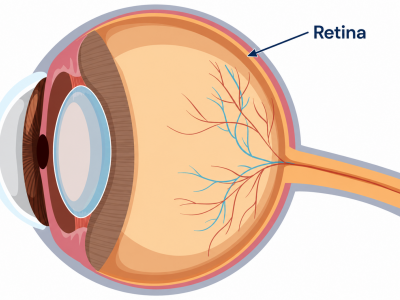
Retina: the part of your eyes that makes it possible for you to see the world.
25 September 2026
Every day, your eyes receive thousands of images: a smile, the scenery while you drive, a screen, a sunset, the face of someone you love. But for all of that to become what we actually see, there is one part of the eye that does an extraordinary job and often goes unnoticed: the retina.
What is the retina?
It is a thin layer of tissue located at the back of the eye. We could think of it as the “sensor” of a camera: it receives the light that enters the eye and transforms it into signals that travel to the brain through the optic nerve.
Thanks to this process, we can recognize shapes, colors, movements, and details.
The retina contains millions of light-sensitive cells, mainly rods and cones, which constantly work to convert visual information into nerve impulses.
That is why, although we often talk about “vision” as if it depended solely on the eyes, it is actually a process that involves both the eyes and the brain.
Why is it so important to take care of the retina?
Some retinal diseases can develop silently, especially during their early stages. In certain cases, a person may not notice significant changes in their vision until the disease has already progressed.
Conditions that can affect the retina include:
-
Retinal detachment
-
Diabetic retinopathy
-
Age-related macular degeneration
-
Retinal vascular occlusions
-
Retinitis pigmentosa and other inherited retinal diseases.
Not all of these conditions have the same causes or affect vision in the same way, but many require regular monitoring and ophthalmologic care.
Prevention is also part of eye care
We cannot prevent all retinal diseases, but we can take care of our eye health and detect certain problems at an early stage.
Some important measures include:
-
Having regular eye exams, depending on your age, medical history, and risk factors.
-
Keeping conditions such as diabetes and high blood pressure under control.
-
Not smoking.
-
Protecting your eyes from ultraviolet radiation by wearing appropriate sunglasses.
-
Paying attention to any new changes in your vision.
-
Knowing your family history of eye diseases.
And something very important: don't wait until you have a problem to get your eyes checked. An eye exam can detect abnormalities even before you notice changes in your vision. Request your appointment here.


